- Smart card games for kids combine fun with mental stimulation, boosting memory, strategy, and critical thinking.
- Games like Uno and Sushi Go! teach planning, sequencing, and probability while keeping players engaged.
- Fast-paced games like Spot It! improve visual perception, reaction time, and quick decision-making.
- Memory-focused games such as Rat-a-Tat Cat help kids practice recall and basic math skills.
- Imaginative games like Sleeping Queens encourage creativity, strategy, and social interaction.
- Rotating games, adding mini-challenges, and mixing age groups can keep family game nights fresh and exciting.
- These card games strengthen family bonds while making learning and strategic thinking enjoyable for kids of all ages.
Family game night is a treasured tradition in many households. It’s a chance to connect, laugh, and sometimes even spark a little friendly competition. But let’s face it: not all games are created equal. If you want your evenings to be both fun and mentally stimulating, choosing smart card games for kids is a great way to go. These games aren’t just entertaining—they also sharpen memory, strategy, and critical thinking skills.
In this article, we’ll explore five smart card games for kids that can challenge the entire family and make game night something everyone looks forward to.
Why Choose Smart Card Games for Kids?
Before diving into the games themselves, it’s worth asking: why focus on “smart” card games for kids? Choosing these games isn’t just about keeping kids entertained—it’s also a way to introduce family card games that everyone can enjoy together.
- Cognitive Development: Card games can help improve memory, logic, and problem-solving skills.
- Social Skills: Playing together teaches kids about teamwork, taking turns, and handling winning or losing gracefully.
- Family Engagement: Strategic games create opportunities for family members to interact in meaningful ways.
- Entertainment: Smart doesn’t have to mean boring—these games are designed to be exciting and fun.
With that in mind, let’s check out the top five picks.
1. Uno – More Than Just Colors and Numbers
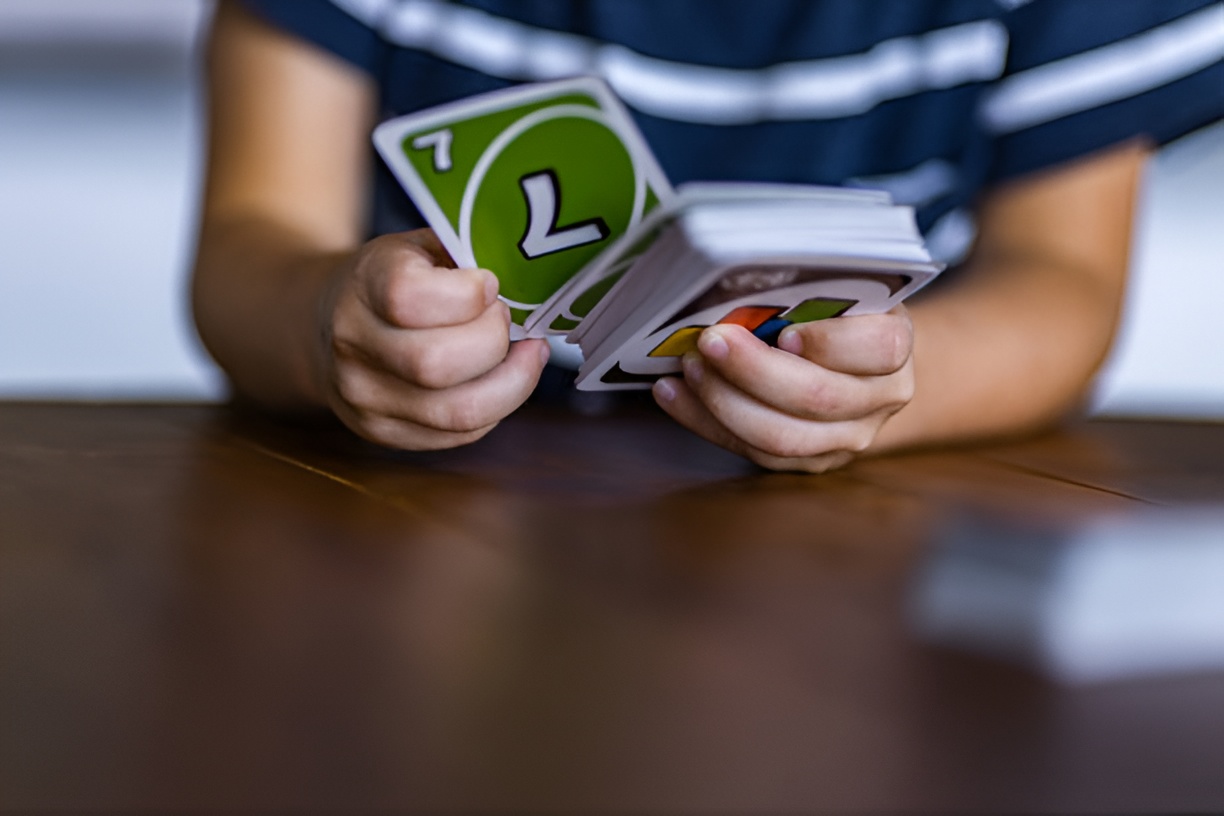
Uno is one of the most popular card games worldwide, but it’s also surprisingly strategic. While it seems simple at first glance, winning requires players to plan ahead, anticipate opponents’ moves, and sometimes take risks.
Why it’s smart:
- Players practice pattern recognition and sequencing.
- Strategy comes into play when deciding which cards to hold and when to play special action cards.
- Kids learn to manage frustration and practice patience.
Tips for family game night:
- Mix in house rules for added challenge, like stacking +2 cards or swapping hands.
- Set up mini-tournaments for longer evenings.
- Encourage older kids to mentor younger siblings on strategy to make it a cooperative learning experience.
2. Spot It! – Quick Thinking Wins
Spot It! is a fast-paced card game that’s perfect for families with kids of different ages. The goal is to spot the matching symbol between two cards before anyone else does.
Why it’s smart:
- Sharpens visual perception and reaction time.
- Encourages focus and attention to detail.
- Helps kids build quick decision-making skills.
Fun ways to play:
- Time each round to see who can spot matches the fastest.
- Mix up the rules by having players find multiple matches in a single turn.
- Combine it with other memory-based challenges to extend the game.
3. Sushi Go! – Strategy in Every Bite
Sushi Go! is a card drafting game that combines cute illustrations with strategic gameplay. Players try to collect winning combinations of sushi dishes while anticipating what their opponents will do.
Why it’s smart:
- Introduces basic probability and planning concepts.
- Encourages strategic thinking, as players must consider both their own hand and others’ potential moves.
- Teaches kids about goal setting and adapting to changing circumstances.
Family game night tips:
- Use a scoring sheet to track progress and encourage friendly competition.
- Play multiple rounds to let strategies evolve.
- Discuss the choices at the end of the game to help kids reflect on their strategies.
4. Rat-a-Tat Cat – Memory and Math Skills Combined
Rat-a-Tat Cat is a clever card game that mixes memory with basic math. Players aim to have the lowest score by swapping, drawing, and remembering cards throughout the game.
Why it’s smart:
- Strengthens memory as kids try to recall card positions.
- Introduces simple addition and subtraction in a playful way.
- Encourages strategic thinking with limited information.
Tips for family play:
- Challenge older kids to play with a “no peek” rule to increase difficulty.
- Turn it into a learning opportunity by asking kids to explain their strategy.
- Play with smaller hands first to build confidence before moving to full rounds.
5. Sleeping Queens – A Game of Strategy and Luck
Sleeping Queens was created by a six-year-old, proving that smart card games can be imaginative as well as educational. Players wake queens, use strategy cards, and try to collect the most queens to win.
Why it’s smart:
- Encourages memory, strategy, and planning.
- Balances luck and skill, so kids stay engaged even if they aren’t winning every turn.
- Promotes social interaction and sportsmanship.
Family game night strategies:
- Start with the basic rules, then introduce extra strategies for older players.
- Encourage creative thinking by discussing different ways to use action cards.
- Use it as a way to teach kids how to handle unexpected setbacks.
How to Make Card Games for Kids More Engaging

Even the smartest card games can feel repetitive if you play them the same way every time. Here are some ideas to keep things fresh on family game night:
- Rotate Games: Switch games each week to keep excitement high.
- Introduce Mini-Challenges: Add time limits, score multipliers, or creative house rules.
- Mix Ages: Pair older kids with younger siblings for cooperative play.
- Keep It Friendly: Celebrate clever moves and creative strategies, not just wins.
- Reward Effort: Small incentives or silly prizes can motivate participation and keep everyone engaged.
FAQs About Card Games for Kids
Q: What’s the best age for these games?
Most of these games work well for kids ages 5 and up, but some, like Sushi Go! and Rat-a-Tat Cat, may be better for ages 7+.
Q: How long do these games take to play?
- Uno: 15–30 minutes per round
- Spot It!: 10–15 minutes
- Sushi Go!: 15–20 minutes per round
- Rat-a-Tat Cat: 20–30 minutes
- Sleeping Queens: 20–30 minutes
Q: Can these games be played with more than two players?
Yes! All of these games are designed for multiple players, making them perfect for family game night.
Q: Are these games educational?
Absolutely. Each game strengthens cognitive skills, social interaction, and strategic thinking while still being entertaining.
Final Thoughts
Choosing smart card games for kids is an excellent way to make family game night both fun and enriching. From memory challenges to strategic decision-making, the games featured here offer something for every type of family. Whether you’re playing a quick round of Spot It! or a strategic session of Sushi Go!, these games will keep kids engaged, thinking, and most importantly, laughing together.
Next time you gather around the table, consider these five smart card games for kids and watch your family game night reach a whole new level of fun and challenge.